



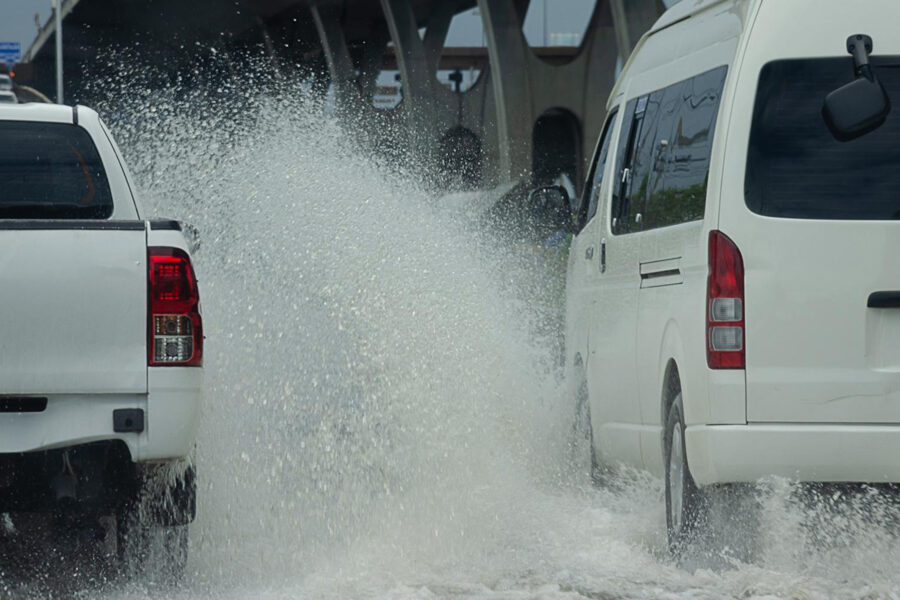
As autumn approaches, the likelihood of heavy rainfall and subsequent flooding increases. According to the AA, one in three flood-related deaths occurs in vehicles, making it crucial for drivers to understand how to navigate flooded roads safely. Just a small amount of water can wreak havoc on your engine, leading to costly repairs. In this blog post, we’ll explore essential tips on how to drive on flooded roads this autumn while keeping safety at the forefront.
Drive Slowly
One of the most critical pieces of advice when driving on flooded roads is to reduce your speed. Water can significantly affect your vehicle’s grip on the road, increasing the risk of aquaplaning. Aquaplaning occurs when your tyres lose contact with the road surface due to a layer of water between them and the road. If you find yourself aquaplaning, it’s important not to panic. Gradually reduce your speed and hold the steering wheel lightly until you feel your tyres regain grip.
Test Water Depth Before You Set Off
Before embarking on a journey during rainy weather, it’s wise to assess the depth of any potential floodwater you may encounter. A general rule is not to drive through floodwater deeper than 10cm (approximately 4 inches). If you’re unsure about the depth, it’s best not to risk it—turn around and find an alternative route instead. Additionally, avoid stopping in floodwaters unless absolutely necessary; stopping can lead to dangerous situations.
Don’t Make a Splash
Splashing pedestrians while driving through puddles may seem harmless but can lead to fines and create hazardous conditions for others. To avoid this, steer clear of large puddles whenever possible or reduce your speed significantly when passing through them. Not only does this help keep pedestrians dry and safe, but it also reduces the chances of losing control over your vehicle.
Test Your Brakes After Flooded Roads
Once you’ve exited a flooded area, it’s essential to test your brakes immediately. The wet conditions can cause brake pads and discs to become less effective temporarily due to moisture accumulation. By gently applying pressure on your brakes after leaving a flooded road, you help dry them out and ensure they remain responsive for future use.
Stay in Your Car if It Breaks Down
If you find yourself stranded due to flooding or mechanical failure, it’s crucial that you stay inside your vehicle unless you’re on a motorway hard shoulder where safety is compromised. In such cases, turn on your hazard lights and look for a safe place where you can stop without endangering yourself or other drivers.
Opening the bonnet in these conditions is also ill-advised; exposing the engine components directly to rainwater can lead to severe damage that could cost thousands in repairs.
Use Your Lights Wisely
Visibility often decreases significantly during heavy rain or flooding conditions. If visibility drops below 100 metres (approximately 328 feet), switch on your headlights immediately; this helps other drivers see you as well as improving your own visibility ahead. In particularly foggy conditions where visibility is severely compromised, using fog lights can be beneficial—but remember that these should be turned off as soon as visibility improves since they can dazzle other drivers.
Don’t Stop Moving
Keeping your car moving is perhaps one of the most vital tips for driving through flooded areas safely. Stopping could allow water from outside enter into critical components like the exhaust pipe—leading potentially irreversible damage that could leave you stranded or facing expensive repairs later down the line.
If you’re forced into a situation where stopping becomes unavoidable (for instance due traffic congestion), keep engine revs up by gently pressing down on accelerator pedal until you’re able resume moving again safely.
Driving during autumn rains brings unique challenges—especially when faced with flooded roads—but by following these guidelines about how to drive on flooded roads this autumn , you’ll be better equipped for whatever Mother Nature throws at us! Always prioritise safety over convenience; if conditions seem too risky or uncertain—don’t hesitate turn back! Remember: no destination is worth risking lives over! Stay safe out there!
Van Hire Warrington
Warrington Van Hire has secure car parking and is situated close to all the main transport networks in Warrington. For Van Hire Warrington, Van Hire Runcorn, Van Hire Widnes, Van Hire Altrincham & Van Hire St Helens van, get in touch with us now for a competitive quote.


