



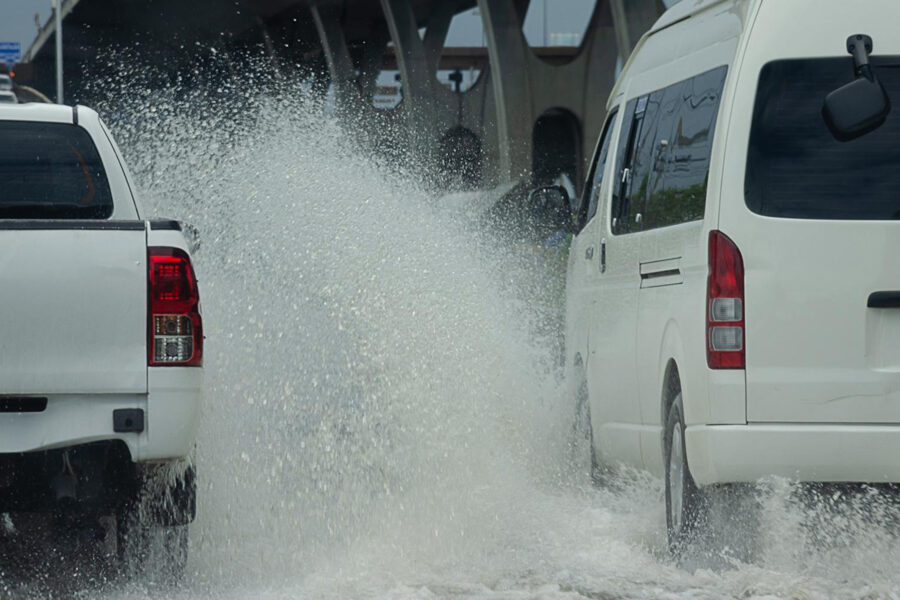
Heavy rain turns a routine drive into a genuine hazard, and a hire van handles flooded roads differently from the car most people are used to. Knowing how to drive a hire van safely on flooded roads matters across the low-lying ground near the Mersey and the Manchester Ship Canal, where surface water gathers quickly after a downpour. For anyone arranging van hire in Warrington through the wetter months, a few sensible habits make the difference between a delayed job and a damaged vehicle, and the team at the Cockhedge depot on Tilley Street are happy to talk a route through before a van leaves.
Understanding the risks of flooded roads
Floodwater is one of the most underestimated driving hazards on British roads. Standing water hides potholes, lifted drain covers and debris, and it is almost impossible to judge the true depth from behind the wheel. A laden van sits heavier and lower than a car, so water that a hatchback might wade through can reach a van’s sills and electrics. Preparation and a calm, cautious approach are what keep a hire van and its driver out of trouble when the road ahead is under water, and most flood-related incidents come down to a driver simply pressing on when the sensible choice was to turn back.
Slow right down
Reducing speed is the first rule. On a waterlogged surface the tyres lose grip easily, and a van can begin to aquaplane with little warning. If the steering goes light and the van starts to slide, ease off the accelerator and hold the wheel steady until the tyres bite again rather than braking hard. As a rule of thumb, water more than around ten centimetres deep is best avoided altogether, and moving water should never be driven into, as it takes surprisingly little depth to lift and carry a vehicle off the road.
Do not make a splash
Driving fast through standing water and soaking pedestrians or cyclists is not only inconsiderate, it can also land a driver with a fine and penalty points. Where a puddle has to be crossed near a pavement, slowing to a crawl protects people on foot and keeps spray out of the van’s engine bay. Being mindful of others sharing a flooded road is part of driving a hired vehicle responsibly.
Test the brakes afterwards
Brakes behave differently once they are wet. After passing through standing water, and where it is safe to do so, a gentle press on the brake pedal helps dry the discs and confirms they are responding properly before they are needed in earnest. This takes only a second and restores full stopping confidence, which matters more in a heavier van than in a car.
Stay with the van if it stops
If a hire van does stall or break down in floodwater, the safest place is usually inside it. Pull over as far from the moving water as possible, switch on the hazard lights and stay put unless remaining in the vehicle becomes dangerous. Stepping out into moving floodwater is far riskier than it looks, and a stranded van is easier for help to reach than a person on foot in poor conditions.
Use lights and keep visibility up
Heavy rain cuts visibility sharply. Dipped headlights help a van be seen, and fog lights are sensible when visibility drops below 100 metres, switched off again once the rain eases so as not to dazzle other drivers. Keeping the windscreen clear and the demister running is part of the same job of seeing and being seen, and it is easy to overlook in an unfamiliar vehicle.
Keep moving gently through water
Where a flooded stretch genuinely has to be crossed and is shallow enough to be safe, a steady low gear with light revs keeps water out of the exhaust and maintains momentum without racing the engine. Stopping in the middle of standing water risks drawing water into places it should not go, so the aim is a slow, continuous crawl rather than a stop-start crossing.
Choosing a van and a route for wet weather
A tall van behaves differently again when the wind gets up with the rain. A high-sided long wheelbase or extra long wheelbase van catches crosswinds on the exposed stretches of the M6, M62 and M56, so a steady speed and a firm grip pay off. For shorter local jobs in poor weather, a more compact short wheelbase low roof van is easier to place on narrow, waterlogged lanes. Whatever the vehicle, checking the route for known flood spots before setting off saves a difficult turnaround later, and the depot’s familiarity with the local roads is worth tapping into. Anyone unsure which vehicle suits a wet-weather job will find the van hire FAQs a useful starting point.
Local roads and arranging a van in Warrington
The depot serves Warrington and its surrounding towns, with secure on-site car parking and a fleet of more than seventy vehicles, no deposit required on most. Drivers collect for journeys across Latchford van hire, Penketh van hire, Great Sankey van hire, Thelwall van hire and Woolston van hire, much of it on the low-lying ground that needs the most care in wet weather. To check availability and talk a wet-weather route through before collection, call 01925 396 222 or complete the online enquiry, and the team will help match the right van to the job and the conditions.


