


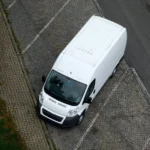

Anyone planning to shift a large load tends to ask the same thing before booking — can you drive a Luton van with a normal car licence? For the majority of drivers the answer is yes, which is one of the reasons the Luton remains such a popular choice for house moves, furniture runs and bulky deliveries. A standard UK car licence covers a great deal more than a small panel van, so plenty of people arranging van hire in Warrington go straight for the high-capacity Luton without needing any extra qualification. The point worth understanding is not whether you are allowed to drive one, but how the weight rules quietly shape what you can safely load.
What a Standard Car Licence Actually Allows
A standard category B licence, the one issued when you pass the ordinary car driving test, entitles you to drive a vehicle with a maximum authorised mass of up to 3,500kg. That covers everything from a small car-derived van right up to a full-size Luton box van. The Luton vans on the 3.5 tonne fleet sit exactly at the top of that category B ceiling, which is precisely why they are designed to stay drivable on an everyday licence. A driver who passed their test yesterday in a hatchback is, in licensing terms, entitled to collect and drive one.
The Weight Limit That Matters
Maximum authorised mass is the fully loaded weight of the vehicle — the van itself, the fuel, the driver and any passengers, and everything in the back. The 3,500kg figure is not the weight of the empty van; it is the absolute legal limit once the van is loaded and on the road. Stay at or below that line and a category B licence is all that is required. Go above it and the vehicle is reclassified as a heavy goods vehicle, which calls for a C1 licence and a different set of rules entirely.
If You Passed Your Test Before 1997
Drivers who obtained a car licence before 1 January 1997 usually hold additional C1 entitlement, which permits vehicles between 3,500kg and 7,500kg. For Luton hire this rarely changes anything in practice, because the fleet is built on a 3.5 tonne chassis that already falls inside an ordinary licence. It is still worth checking the categories listed on the back of the photocard, as entitlements vary by the date a licence was first issued. A separate point worth noting is that the rules now allow heavier electric and other alternative-fuel vans up to 4,250kg on a category B licence, although the diesel Lutons most movers hire remain firmly within the standard 3,500kg limit.
Why Payload Is the Real Catch With a Luton
This is where the genuinely useful detail lies, and where a lot of first-time hirers are caught out. Because the large box body and the tail lift add a substantial amount of weight to the base vehicle, the usable payload on a 3.5 tonne Luton is smaller than the cavernous load space suggests. The van might swallow the contents of a two-bedroom flat by volume, yet still reach its legal weight limit well before the space is full if the load is dense — think appliances, packed boxes of books, or paving and tiles. Being legally entitled to drive the van does not exempt anyone from the overloading rules, and a vehicle tipped over 3,500kg can attract penalties even with a perfectly valid licence. The sensible approach is to load heavy items low and spread across the floor, and to be honest about how dense the load really is before filling every last inch of the box.
Choosing Between a Tail Lift and a Low Loader
The fleet offers two distinct Luton options, and the choice affects both ease of loading and effective payload. A Luton van with tail lift is the natural pick when there is no loading dock and heavy items such as washing machines, sofas or filing cabinets need lifting to floor height without a struggle, since the powered platform does the heavy work. A Luton low loader van sits lower to the ground with a gentler load height, which suits a lot of manual loading and trolley work where a tail lift is not essential. For drivers who want maximum internal length rather than a box body, an extra long wheelbase van is worth comparing, as it trades the Luton overcab pod for a longer continuous load floor.
Collecting Your Luton From the Warrington Depot
Collection is straightforward from the central depot at Tilley Street, at the main entrance to Cockhedge Shopping Centre, with secure parking on site and no deposit required on most vehicles. Bring a full, valid driving licence, and remember the depot operates Monday to Saturday from 8am to 4pm and is closed on Sundays, so a Saturday job needs collecting in good time. The location makes light work of reaching the M6, M62 and M56, which is handy whether a move involves a Runcorn van hire trip, a Widnes van hire drop-off, or a longer run out towards Northwich van hire or Golborne van hire. One Luton-specific reminder for the journey itself — the tall box body stands around three and a half metres high, so low railway bridges and height-restricted car parks need watching closely, particularly on the older routes through Cheshire villages.
Booking Your Luton Van
For most people a normal car licence is all that stands between them and a full-size Luton, leaving payload awareness as the one thing genuinely worth planning around. To check availability, confirm which Luton suits the load, or talk through whether a tail lift is needed for the job, call 01925 396 222 or complete an online enquiry and the depot can match the right vehicle to the move.


