


The right vehicle for a trade job depends far more on what is being carried than on the job title on the side of a van. A plasterer collecting boards, a landscaper shifting sleepers and a kitchen fitter moving units all need very different load areas, and choosing well saves a wasted trip. Van hire for tradespeople in Warrington gives that flexibility without owning several vehicles, and with van hire in Warrington drawn from a fleet of more than seventy vans there is usually a vehicle that matches the materials exactly rather than roughly. The choice often comes down to how a load is lifted on and off, and how long or heavy it is.
Choosing by how the load is lifted, not just how big it is
Most trade loads fall into one of three patterns. Some need to be loaded over the side or the back because they are long and awkward. Some are heavy and need help getting up to deck height. Some are bagged or boxed and simply need a secure, dry space. Warrington Van Hire keeps separate vehicle types for each of those situations, and picking the one that suits the handling makes the difference between a smooth collection and a struggle in a trade-counter yard.
Long and awkward materials that load from the side
Timber, guttering, fencing and scaffold boards rarely sit neatly inside a panel van. A flatbed dropside van solves this because the sides and rear drop down, so lengths can be loaded from whichever side the forklift or the yard happens to be on. There is no doorway to feed materials through and no roof to catch a long board against. For anyone working out toward Golborne van hire where a job might mix fencing and decking in one collection, an open dropside bed is far easier to strap down and unload than a closed van.
Heavy items that need help to deck height
When the materials are dense, the question becomes how to get them off the ground. A Luton low loader van sits lower than a standard Luton, which shortens the ramp angle and makes wheeling appliances, paving packs or heavy flight cases up into the box far less of a fight. The low deck is the detail that matters on a one-person collection, because it keeps the lifting sensible and the load stable once it is aboard.
Tools and bagged goods that need a dry, secure space
For a day of tools, bagged aggregate, adhesives and smaller fittings, an enclosed van keeps everything dry and out of sight between stops. The practical point for tradespeople is that all of these vans are 3.5 tonne vehicles that can be driven on an ordinary car licence, so there is no need to upgrade entitlement to take on a heavier-looking van for the day. Loads still need to stay within the van’s weight limit, which is where matching the vehicle to the materials at the booking stage pays off.
Collecting from Warrington trade counters
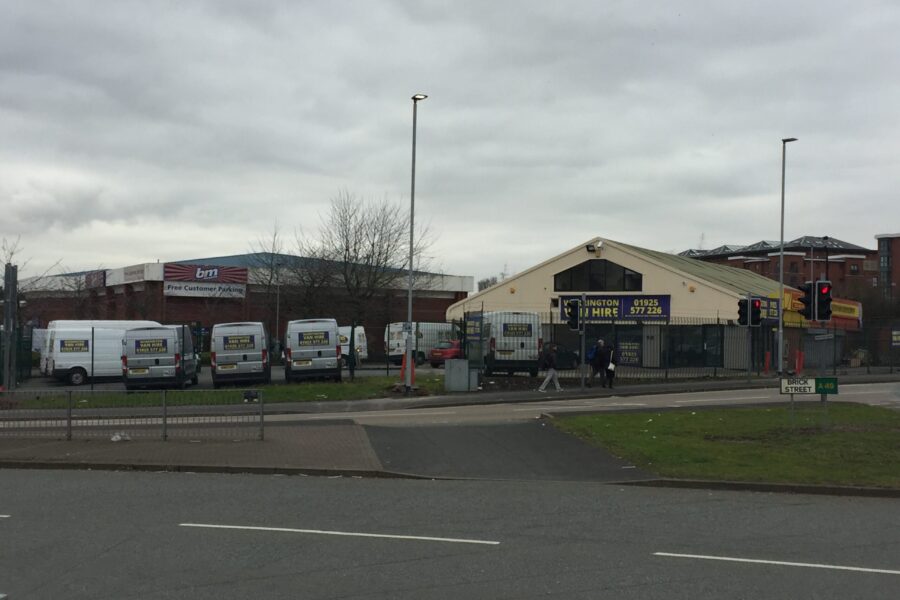
The depot sits in the centre of Warrington on Tilley Street, easy to reach with secure parking on site and close to the routes most trade counters and builders’ merchants use around the town, which keeps the run between collecting the van and collecting the materials short. There is helpful detail on this in the guide to collecting building materials from Warrington trade counters, including how the van choice changes depending on whether a yard loads by forklift or by hand. For work over toward Risley van hire and the eastern business parks, starting from a town-centre depot avoids a long empty leg before the working part of the day even begins.
Securing the load before driving away
Whichever van suits the job, the load needs restraining properly before it moves. Heavy items belong low and toward the front, over or just behind the front axle, with straps to anchor points rather than relying on the load resting against the bulkhead. On a dropside, ratchet straps over the top of timber stop it shifting under braking. Spending a few minutes on this at the yard is far quicker than recovering a load that has slid on the first roundabout.
Why the right trade van saves a second trip
The cost of choosing the wrong trade van is rarely the hire itself. It is the wasted half-day when a load will not fit, the second journey back to the yard, and the job that slips because the materials arrived late. Matching the vehicle to the longest and heaviest items at the booking stage avoids all of that. A dropside that takes full lengths of timber in one pass, or a low loader that lets one person manage a heavy delivery without help, turns a fiddly collection into a single clean run.
For a trade business where time on site is what gets paid, the few minutes spent describing the load when booking are some of the most valuable minutes of the week. It is worth thinking not only about the materials for the job in hand but about how they come off the vehicle at the other end, because a van that loads easily at the merchant but cannot be unloaded sensibly on a tight site has only moved the problem. The depot can weigh up both ends of that when a customer explains where the materials are going as well as where they are coming from.
Booking the van around the materials
The most reliable way to get the right trade van is to book around the materials list rather than the trade. Describing the longest item, the heaviest item and roughly how it will be loaded lets the depot confirm whether a flatbed, a low loader or an enclosed van fits best. No deposit is required on most vehicles, and both short and long term hire suits everything from a single collection to a fit-out lasting weeks. To arrange a van for an upcoming job, call 01925 396 222 or send an online enquiry with the dates and the load.


